
How much to feed
There are lots of factors that influence how much your cat needs to eat.
- The calorie content of the diet (some products within the Arden Grange range are lower or higher calorie than others).
- The size of your cat and his or her weight status. Over or underweight animals will need less or more food, respectively.
- The calorie content of any treats and extras if fed. The main diet should be reduced to accommodate these.
- The animal’s age. Kittens need more calories than adult cats. Older animals who are slowing down with age have a lower requirement for energy than a normally active adult.
- Lifestyle. An outdoor cat who enjoys hunting will need more fuel than sedentary cats. There may also be situations unique to the pet and owner, e.g. a period of enforced rest after an injury. Temperament. Stressed or anxious animals tend to burn more fuel than those who are generally very relaxed.
- Individual metabolism. Just like people, some animals have a naturally quicker metabolism than others.
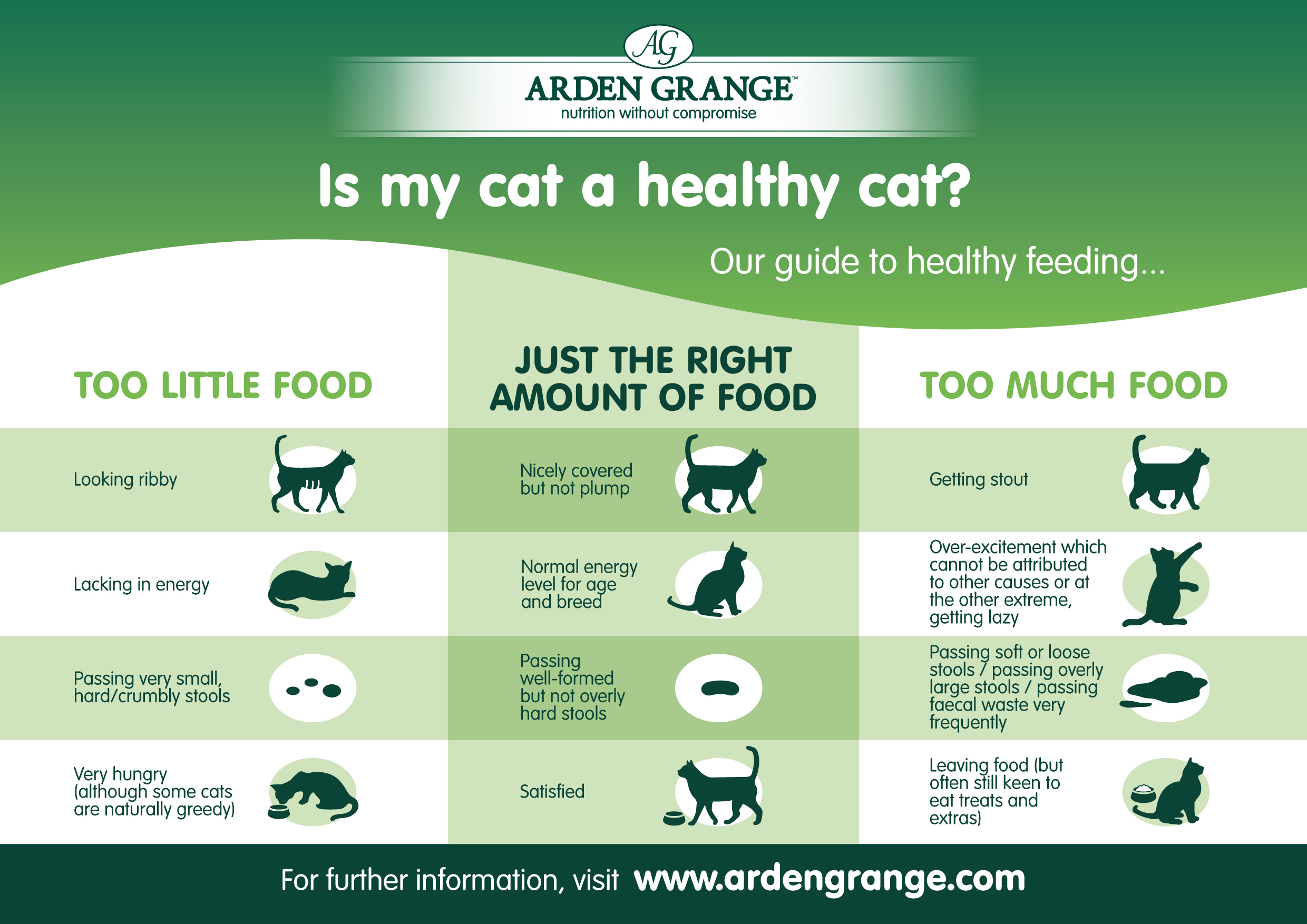
Feeding guides can only estimate the quantity of food required, due to considerable variation between individuals. However, they should provide a reasonable starting point.
Make changes gradually
Gradual increases may have the following benefits
- Avoids unaccustomed larger volumes - which might not be eaten, particularly if your cat is known to have a small appetite.
- Allows gradual expansion of the stomach, and the digestion time to adapt to accommodate larger feeds. Sudden increases may cause diarrhoea in some sensitive animals.
- May help maintain more stable blood sugar levels.
Gradual decreases may have the following benefits
- Lowers the risk of a very hungry animal, and subsequent issues that can be associated with hunger, e.g. scavenging, stealing food, coprophagia (stool eating).
- Prevents lowering the metabolic rate (which can happen if the body thinks it is being starved).
- Reduces the risk of hepatic lipidosis (a serious condition also known as fatty liver disease).